
Embracing Mental Health Awareness Through Balancing Self-Care and Treating Yourself - A Special Edition
Mental Health Awareness Month offers a vital opportunity to reflect on how we take care of ourselves and how we choose to treat ourselves. Both of these…

Mental Health Awareness Month offers a vital opportunity to reflect on how we take care of ourselves and how we choose to treat ourselves. Both of these aspects are crucial for our overall well-being. We often hear about the importance of self-care from a mental, physical and spiritual perspective, but this post, I want to focus on something equally significant: treating ourselves. More important than taking care of yourself, is treating yourself. Let’s explore how the act of treating ourselves can positively impact our mental health.
For some women, showing up as their best self can include a multitude of things. Sometimes, it’s not even about showing up as your best self, but taking time to treat yourself in ways that are meaningful and contribute towards putting you in a better mood. Retail therapy and spa day much! There are psychological aspects to why this happens and our chemical makeup, as well as when we experience imbalances.
Recently, I was watching Like A Boss, about two women starting a cosmetics company. For some reason, this got my mind thinking about the variations among women that prefer to invest in cosmetics to improve their physical appearance and the psychology behind it. This is not to be confused with the belief that women who invest in “x” have lower self esteem or less confidence. It’s to normalize the stigmas surrounding why some women prefer to invest in their physical appearance more than others. I hate to break the bad news to you men, but no! It’s not always for or about you.
Whether it’s makeup, new jewelry, retail therapy, the hair/nail salon or simply investing in our appearance with a closet full of heels and purses, treating ourselves contributes towards us showing up as our best selves. It goes beyond vanity; it’s about embracing who we are and taking steps to uplift our internal spirits. For the women who find this topic to be a bit vane, or prefer to invest in themselves in other ways, it’s okay, that’s the beauty of diversity.
The Power of Makeup
Makeup is more than just a beauty product; for many, it is a powerful tool for transformation and self-expression. For instance, studies show that 75% of women feel more confident when they wear makeup. It can be a creative outlet that allows individuals to express themselves through colors and styles.
From a personal standpoint, and at this point in my life. I do not wear makeup unless I am attending something that I feel calls for it. However, when I began my journey with makeup and being a person that is fascinated with art, it used to feel like a way of expressing myself rather than a way to impress someone. In my NYC days, I love matching my eyeshadows and lipticks to my outfits. ROY G. BIV was a school age concept implemented in my makeup box. Yes, your beautiful face is the canvas that you can express creativity with.
In my experience, applying makeup is an energizing ritual, used when needed. I also have some girlfriends that used to religiously get up at the break of dawn to apply their look and get their day started. Definitely throwing shade at my counterpart, here at T&T. It lets us experiment with various looks, enhancing our mood and boosting confidence through feeling liberated. Interestingly, I don’t feel less beautiful without it; rather, makeup serves as a canvas for my creativity and emotions. If I am being honest, I feel most confident when I wear my bantu knots and blue light computer glasses, ask me about that another time.
However, we must also recognize the underlying psychological aspects of makeup use.
Investing in our physical appearance can be seen as an act of self-love. It’s essential to normalize the idea that this investment does not equate to low self-esteem but rather celebrates our individuality and beauty.
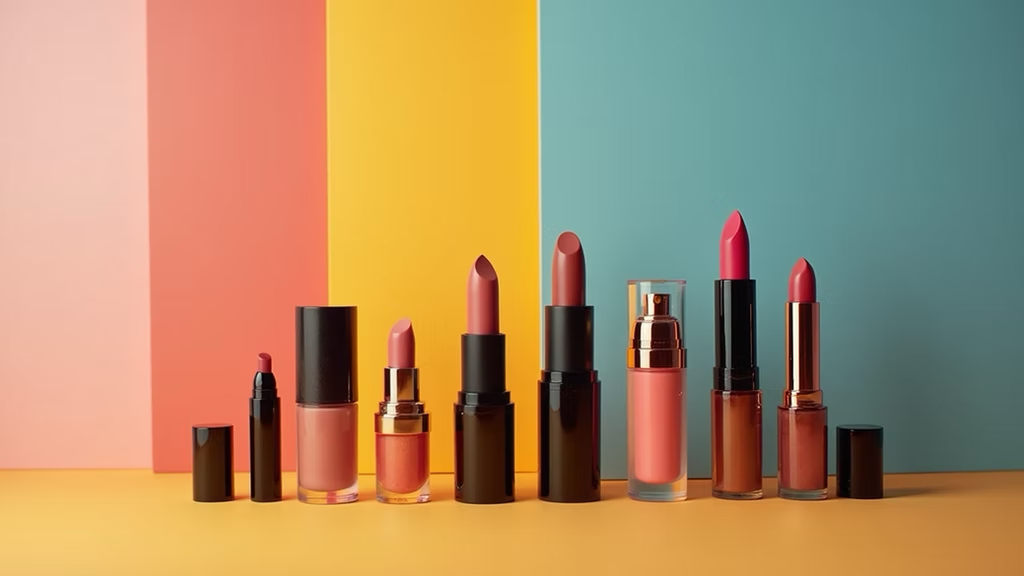
Various shades of different brands of lipstick. A simplistic go-to.
Retail Therapy: A Retail Love Affair
I think most of us can agree that there is an extreme and well-documented enjoyment in shopping, often referred to as “retail therapy.” In some cases, I’ve heard this referred to as “shoppers addiction” as well. Research indicates that a good portion of people report feeling happier after shopping. When we as humans experience happy moments, our body releases certain chemicals. For many of us, when shopping that release of dopamine and other happy endorphins occurs. In stressful or sad moments, we are likely to revert back to that behavior. I personally enjoy treating myself with occasional shopping sprees, whether it’s buying a stylish outfit or a cozy home accessory. However, it is important NOT to confuse people who simply like nice/quality things or enjoy shopping on their downtime, with someone who is likely experiencing a crisis.
If you feel like you or someone you know is experiencing a crisis, and displaying symptoms in this manner, its important to reach out to a licensed or certified professional equipped with the necessary skills to help. This can be referred to as compulsive buying disorder. stemming from low self-esteem, degraded mental health, or someother stressful indicator. Proceed with caution and seek help when needed.
While retail therapy can bring temporary joy, it’s important to be aware of its drawbacks. Relying too heavily on shopping can lead to issues like financial strain or buyer’s remorse. Establishing boundaries is vital. One approach I find helpful is creating a budget before shopping. This allows me to enjoy retail therapy while maintaining my financial health.
If you are not good at budgeting, don’t worry. Try things such as the 50/30/20 rule, where you separate your money. 50% place in your checking account, or the account you use to pay living expenses. 30% place in a savings account and use it for saving and debt repayment. 20% use for spending. If you do not spend as much, I’d also suggest you play around with the numbers and allocate more for saving and try different methods of savings, such as investment accounts.
This is not a hard rule, but many of us have spent years of learning the hard way. So feel free to look at other ways to ensure you are not living to work but working to enjoy living! Life is a journey and I am happy to act as your e-advisor!
The Relationship Between Confidence, Beauty, and Cosmetic Surgery
Cosmetic surgery has become more popular over the years as a way for some individuals to enhance their appearance. With constant and innovative advancements in technology, it has made the process more simplified, easier to recover from, and increasingly accessible to the everyday person. I will tread lightly on this topid, due to personal opinions, but studies suggest there is a prevalence of underlying psychiatric disorders in people who elect for surgery. According to the American Society of Plastic Surgeons, the number of cosmetic procedures performed has increased by 200% since 2000. This raises essential questions about confidence and self-esteem.
It is important to NOT confuse this topic, with medical conditions requiring treatment or even just wanting something to look a bit different. In an age where information is accessible with the click of a button, its important to understand how we have advanced from ancient thinking and not everything is just a yes or no… or agree or disagree. Therefore, this section of the post is to raise awareness of the fine line between something that can start out simple and progress into something a bit more serious if not initially done for the right reasons.
For some women, cosmetic enhancements can provide a significant boost in confidence. A survey revealed that 87% of women who underwent cosmetic procedures felt more confident in their appearance afterward. There’s nothing wrong with this. Understanding that this choice doesn’t reflect a lack of confidence is important Many opt for these procedures as a way to affirm their self-image rather than simply responding to societal pressure. Even if its thickening up those eyebrows a bit!
Embracing Self-Care Alongside Treating Yourself
While treating ourselves through new makeup and shopping for new heels and purses can lift our spirits, we shouldn’t overlook legitimate self-care practices that promote physical, emotional, and mental well-being. This includes regular exercise, proper nutrition, and mindfulness activities that help to ensure when we are enjoying the fruits of our labors, these wants are not a coping mechanism, used to mask underlying negative feelings and thoughts.
I find that balancing self-care and treating myself plays a role in maintaining my mental health, where treating myself is the reward system for self-care practices used to ensure I am able to thrive in a world that can sometimes feel as if its against you. Moving forward, I challenge you to prioritize self-care, and reward yourself by treating yourself in ways that matter most to you. I guarantee you’ll feel more deserving.
Normalizing Our Choices
We must recognize and celebrate the diversity in how women choose to enhance their aesthetics. In relation to diversity, its important to also understand that what looks best is also relevant to an individuals culture, ethnic background, and whatever class society has landed them in. Just because someone invests in their appearance more than others does not mean they are seeking external validation. Just because someone invests in their appearance less than others, does not mean they are less than deserving. They might just invest in other things. For the target audience of this post, it’s about artistry, reclaiming their identity, or because its what they like!
Embracing this diversity is not about ensuring there are different faces in the room. It’s about, when those faces are in the room, they feel welcomed, accepted, acknowledged, and heard. Through this, we pave the way for open conversations about beauty and choice, which makes society more receptive and understanding for open conversations of larger importance on bigger stages in the world. Dismantling the stigma surrounding women’s choices in beauty helps create an understanding environment where everyone can feel empowered.
A Journey of Self-Love
Mental Health Awareness Month reminds us that treating for ourselves is just as important as caring for ourselves, but we can only treat ourselves properly when we care for ourselves properly. Women can thrive when we embrace our multifaceted identities and the choices that come with them. Finding the balance between self-care and treating ourselves is the key to leading a fulfilling life.
Let us celebrate our uniqueness, invest in our self-expression, and find joy in the journey. Whether it’s through the empowering act of wearing makeup or the delightful rush of a shopping spree, let’s take time this month to reflect on how we can embrace both self-care and the enjoyment of treating ourselves with pride!
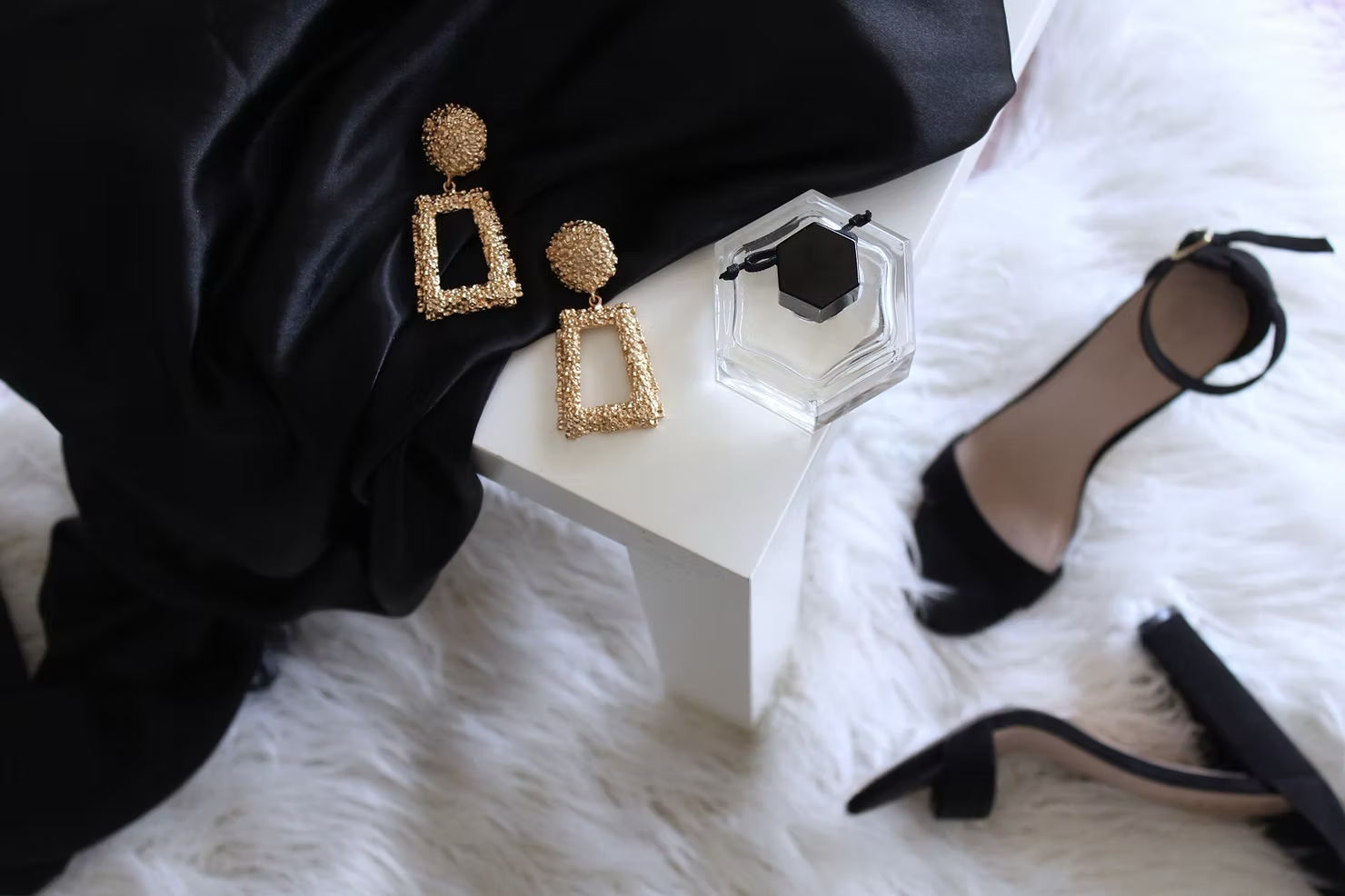
Display of heels and jewelry to accessorize an evening gown.
A Call to Action
We’ll in this discussion with “A Call to Action ”, a request for T&T readers to take care of themselves not only during Mental Health Awareness Month, but throughout the entire year. After reading this post, we’d like you to find time during the next week and carve out 30 minutes on a calendar of your choice. During this time, do the following things:
- Grab a small notebook and pen, and find a silent location in your home.
- Take 10 minutes to do a new meditation, in a silent area alone. If you’re drastically new to meditating, just sit in silence and focus on your breathing with your eyes closed. Tip: Review the main Chakras mentioned in last week’s post and select a Chakra that you feel needs healing, and find a meditation that focuses on that.
- Take the next 10 minutes to reflect on and make a list of things that you have done for yourself, in self-care moments, over the last 6 months. Jot down whether or not each one was associated with a traumatic or stressful event. (This will help you to notice any unhealthy habits.)
- Take the last 10 minutes and create a list of the things you’ve done that were NOT associated with a traumatic or stressful event.
- Of the remaining items, see if any raise awareness of new things that you’d like to try for self-care. I challenge you to develop a cadence or schedule a few of them outside of Mental Health Awareness Month to kickstart a self-care routine.
If you find that this helps you to kickstart a new routine, successfully identify a host of other ways to implement self-care, or new meditation practices, reach out through Connect so we can highlight this for other readers. Thanks for stopping by.